
 EN
EN  EN
EN AR
AR BG
BG HR
HR CS
CS DA
DA NL
NL FI
FI FR
FR DE
DE IT
IT NO
NO PL
PL PT
PT RO
RO RU
RU ES
ES SV
SV IW
IW SR
SR SK
SK SL
SL TR
TR FA
FAKeeping your water clean depends a lot on using the right filtration system and biological filtration media is important because it gives helpful microorganisms a home to naturally break down waste. Good media doesn’t just catch debris it also provides you the right conditions for bacteria to grow and work faster, breaking down organic matter and improving water quality. You should know how these materials work helps operators, engineers and plant managers make smarter choices when picking or upgrading a system and real-world results often show noticeable performance improvements.
The Link Between Surface Area and Treatment Capacity
High-efficiency biological filtration media works best because of its large surface area, which provides more space for beneficial bacteria to grow and break down organic waste in the water. Media with small surface areas limit bacterial growth, reducing treatment capacity. Advanced media designs include textured surfaces with tiny grooves and nooks that let bacteria attach securely, even in fast-moving water without clogging. To make it short, when you are choosing media with a high surface area it gives bacteria the right environment to thrive, improving system efficiency and treatment quality.
Material Science: What Makes a Durable MBBR Carrier
The durability of a Moving Bed Biofilm Reactor (MBBR) carrier depends mainly on the material it’s made from. Most good carriers are made from tough, chemical-resistant plastics that handle long-term use without breaking down and resist water chemistry, temperature changes and mechanical wear. A durable carrier balances strength and flexibility like if it’s too soft, it deforms and loses surface for bacteria but if too brittle, it cracks or chips, causing maintenance problems. Engineers often design carriers with surfaces that are both strong and provide maximum area for biofilm and they last for years while supporting healthy bacteria. When you are choosing MBBR carriers, it’s important tohat you consider long-term performance, not only the cost because durable carriers reduce maintenance, avoid drops in efficiency, and allow the system to handle higher loads, helping plants run smoothly without unnecessary repairs.
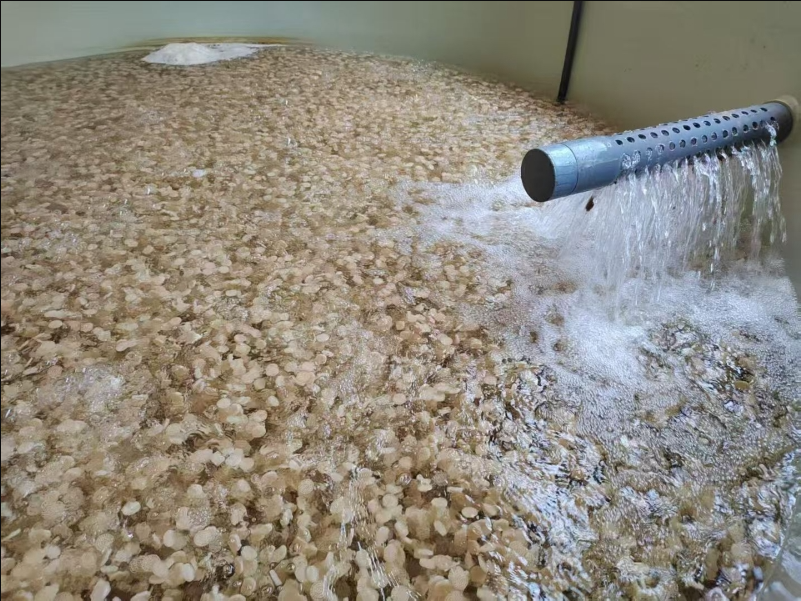
How Biofilm Develops and Thrives on Optimal Biomass Carrier
I learned that biofilm is a living layer of tiny microorganisms that makes biological filtration work, and on a good biomass carrier it grows fast and stays healthy because the carrier gives the right conditions. The carrier’s surface, material, and movement in water help bacteria stick, grow and break down pollutants. When it first added to a reactor, bacteria attach to tiny grooves and rough spots, forming a sticky biofilm that thickens over time, but the carrier keeps it from getting too dense by providing space and good water flow. Moving carriers make sure all parts of the biofilm get oxygen and nutrients, keeping bacteria active. In treatment plants, using carriers with open, rough designs helps the biofilm grow evenly, improving removal of organic matter and nitrogen even during high flows and keeping it strong when wastewater changes. Maintaining the right balance is important, as too much biofilm can clog the system and too little reduces treatment, you should do regular checks, proper aeration, and suitable carriers help the biofilm thrive while keeping the system stable and efficient.
Innovations in AnoxKaldnes MBBR Media Design
AnoxKaldnes MBBR media has evolved significantly, with engineers focusing on efficiency, durability and ease of use. Modern carriers feature optimized shapes with intricate geometries that maximize surface area while remaining lightweight, allowing more bacteria to grow without increasing reactor energy needs. It is made from tough, chemically resistant plastics, the carriers balance flexibility and strength to resist wear while maintaining their shape and surface texture, providing a stable home for biofilm over long-term operation. Their open, free-floating design promotes water flow and improves oxygen and nutrient transfer, boosting bacterial activity and ensuring consistent treatment even under high loads. Real-world results show faster startup times, higher treatment efficiency, and more stable effluent quality compared to older designs. Also the carriers are easy to handle during installation and maintenance, resist clumping and spread evenly in the reactor, reducing downtime and simplifying system management. By combining advanced design, material science, and hydrodynamics, AnoxKaldnes MBBR media continues to set the benchmark for high-performance biological filtration.

We are the largest MBBR carrier manufacturer and exporter in China, and a leading ISO 9001-certified manufacturer of wastewater treatment solutions and recirculating aquaculture solutions with 20+ years of experience, serving clients in 30+ countries.


