
Author: CICI CHENXI 2025-09-01
Recently, the water treatment industry has witnessed a technological innovation breakthrough. The synergistic combination of MBBR (Moving Bed Biofilm Reactor) and MABR (Membrane Aerated Biofilm Reactor) has successfully addressed the challenges of nitrogen removal under high-standard discharge requirements, becoming a focus of industry attention.
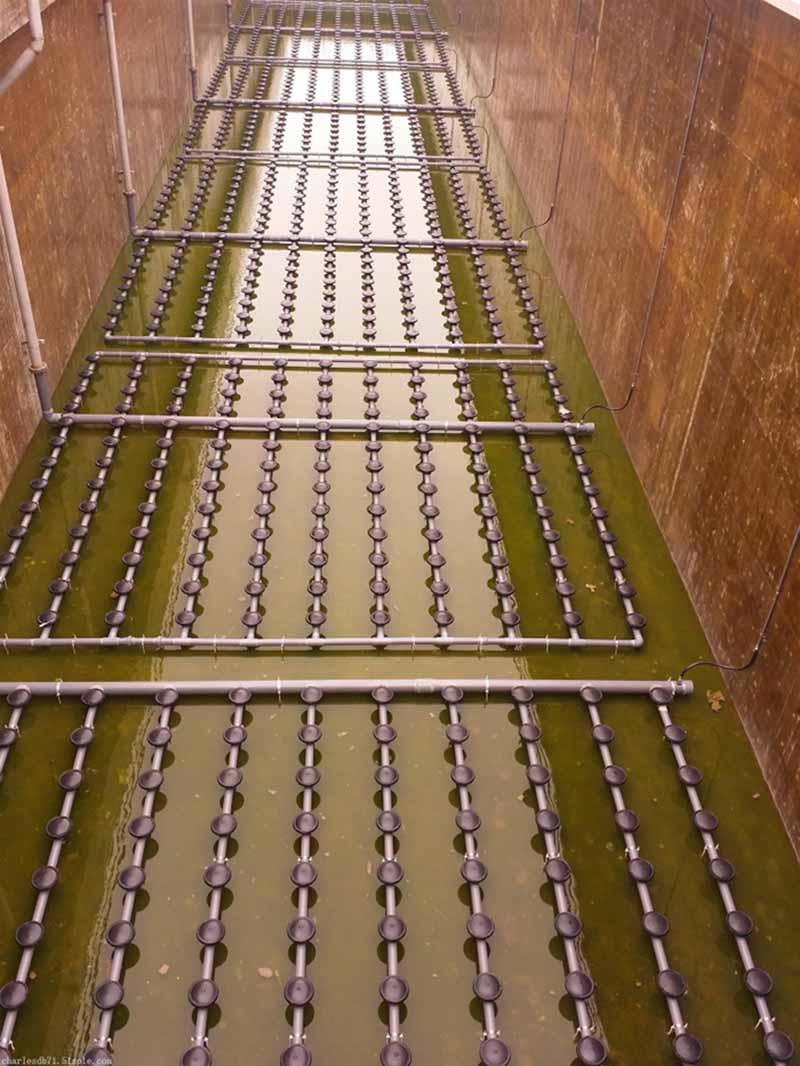
MBBR, leveraging the large surface area of suspended carriers, excels in treating high-load ammonia nitrogen wastewater with strong resistance to impact loads. MABR achieves bubble-free aeration through gas-permeable membranes, with oxygen utilization efficiency reaching 30%-50%, creating ideal conditions for simultaneous nitrification and denitrification. The combination of these two technologies forms a composite system of suspended carriers and fixed membrane modules, achieving perfect functional division of labor.
By integrating MABR modules into MBBR reactors, MBBR handles the main BOD removal and partial nitrification functions, while MABR performs advanced nitrogen removal. Research shows that this configuration increases the total nitrogen removal rate to over 85% while reducing energy consumption by 30%-40%. MABR's efficient oxygen transfer compensates for the low aeration efficiency of traditional MBBR, while MBBR's buffering capacity ensures system operational stability.
Practical engineering cases demonstrate outstanding performance of this synergistic technology. A demonstration project in Nanjing treating 400 m³/d embedded MABR into the process increased the total nitrogen removal rate to 74.4%, achieving stable compliance with effluent standards while reducing energy consumption by 78%. The coupled system reduces sludge production by 40%-50%, lowering sludge treatment costs, and adapts to harsh treatment conditions such as low temperature and low carbon-to-nitrogen ratio.
This technology is not only suitable for new wastewater treatment plants but can also be used for upgrading existing facilities. With continuously improving environmental requirements and the advancement of "dual carbon" goals, MBBR and MABR synergistic technology will continue to optimize and innovate, providing more efficient and energy-saving solutions for the wastewater treatment industry and supporting green, low-carbon development.
Industry experts indicate that this technological breakthrough represents the next generation of wastewater treatment development. Through synergistic operations, it not only solves pollutant removal challenges but also enables resource recovery and reuse, perfectly embodying the concept of circular economy in the water treatment sector.
We are the largest MBBR carrier manufacturer and exporter in China, and a leading ISO 9001-certified manufacturer of wastewater treatment solutions and recirculating aquaculture solutions with 20+ years of experience, serving clients in 30+ countries.

Discover how Decycle, manufacturer in China, enhances salmon growth through advanced biological filtration media and bio filter media.

FOR IMMEDIATE RELEASEShanghai— In the rapidly evolving aquaculture industry, Moving Bed Biofilm Reactor (MBBR) technology has emerged as a game-changer for addressing persistent water treatment challenges. Recent advancements demonstrate MBBR’s resilience...
 EN
EN  EN
EN AR
AR BG
BG HR
HR CS
CS DA
DA NL
NL FI
FI FR
FR DE
DE IT
IT NO
NO PL
PL PT
PT RO
RO RU
RU ES
ES SV
SV IW
IW SR
SR SK
SK SL
SL TR
TR FA
FA
